
What Probate Covers in Monroe County
Probate is the branch of the trial courts that decides what happens to people and property when someone cannot act alone. In Monroe County, the Probate Court handles estates, wills, guardianships, conservatorships, and mental health cases. It also processes name changes and works alongside the juvenile side of the court. When a resident dies, the estate is opened here. When an adult loses the ability to make choices, a guardianship or conservatorship case starts here too.
The Monroe County Probate Court sits within the downtown court campus. It keeps its own docket and its own public access system, apart from the Circuit Court and the District Court. Marriage and divorce papers are not probate matters. Those flow through the County Clerk and the Family Division, and they show up in the county's marriage and divorce records channels instead. For a probate search, the case will almost always be an estate, a guardianship, a conservatorship, a mental health petition, or a name change.
The probate and juvenile sides share a landing hub. That hub links adoption packets, child protection, juvenile delinquency, name changes, and the county youth center. A researcher who is unsure of the case type can start there and follow the link that fits the situation.
Online is a starting point, not the full file. The public portal shows docket data, but the official record stays with the court, and sealed or nonpublic material is never posted for open search.
Probate Terms Defined
Probate filings use a handful of words that trip up first-time readers. A quick reference clears up who does what in an estate or a protective case. The terms below appear on petitions, orders, and letters issued by the court.
- Testator
- The person who made a will. When a testator dies, the will is filed with the Probate Court to open the estate.
- Executor
- The person named in a will to carry out its terms, gather assets, pay debts, and distribute what remains. Michigan orders often call this role a personal representative.
- Intestate
- Dying without a valid will. An intestate estate is divided under Michigan law rather than by the wishes in a will.
- Guardianship
- A court arrangement that gives one person authority over the personal care and daily welfare of a minor or an incapacitated adult, called the ward.
- Conservatorship
- A court arrangement that gives one person authority over the money and property of a minor or a protected adult, with duties to inventory assets and file accountings.
How to Search Monroe County Probate Records
The Monroe County Probate Court runs a separate public access portal for its docket. It is not part of the statewide case search that serves the Circuit and District courts. Use it to confirm that a case exists, to read basic docket entries, and to track hearing dates. When the portal does not show a record, the next step is a phone call or a visit to the counter.
The portal is a CourtView-style system, so most searches begin with a name or a case number. A clear spelling helps. If the file is a decedent estate, the estate is usually indexed under the deceased person's name. Protective cases may be indexed under the ward or protected person.
- Open the Monroe County Probate Court public access portal and choose whether to search by name or by case number.
- Enter the estate name, the ward's name, or the assigned case number, then run the search and open the matching case.
- Review the docket entries and hearing dates on screen. For a certified copy or a document that is not posted, call the Probate Court at 734-240-7346 or visit the counter.
For broader court research, general case searching across the county's trial courts is covered under Monroe County court records. Probate stays on its own portal because its filings and access rules differ from civil and criminal cases.
Monroe County Probate Case Search Fields
The public portal loads its search boxes dynamically, so exact labels appear once the page opens in a browser. The core fields below reflect how a CourtView probate search is built and what the county describes for its access system. Names and case numbers do most of the work.
| Field | Type | Required | Notes |
|---|---|---|---|
| Probate case search | Portal search | Public | CourtView-style public access; exact fields render in the live portal. |
| Name or case title | Text | Optional | Used for estate, ward, or protected-person searches; verify spelling. |
| Case number | Text | Optional | Enter the court-assigned number when it is known. |
| Case type | Filter | Optional | Estate, guardianship, conservatorship, mental health, or name change; some types are limited by access rules. |
| Search controls | Buttons | n/a | Search and reset controls appear in the live interface. |
Note: The portal indexes public probate matters, yet mental health, adoption, and some guardianship files are restricted, so a name may return fewer results than a caller expects.
The Monroe County Probate Court
The Monroe County Probate Court answers questions about filings, packets, hearing dates, and certified copies. Staff can confirm whether a case is public and how to request a document that the portal does not display. The court shares the downtown court complex with the District Court and the County Clerk, so filers should confirm the correct counter before arriving.
Direct contact details, along with links to estates, guardianship, conservatorship, mental health, and payment pages, appear on the Monroe County Probate Court page.
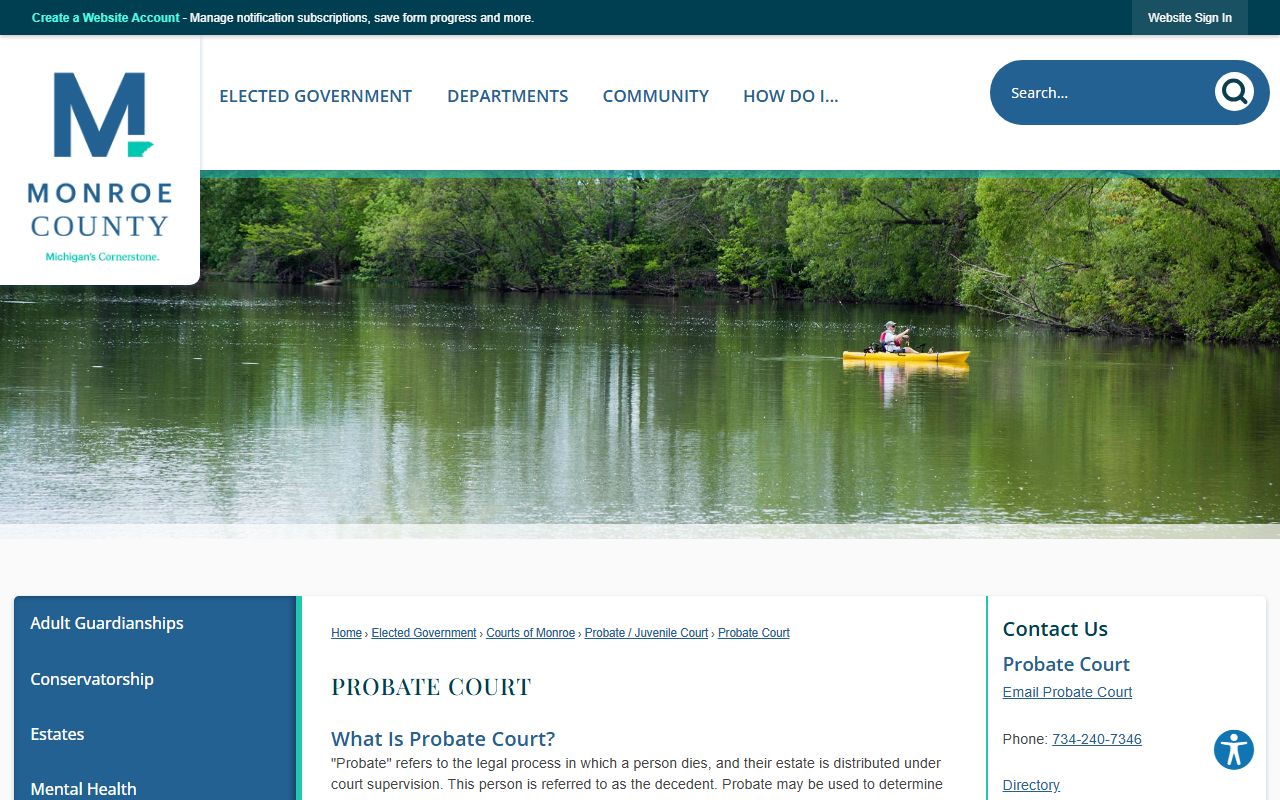
Calling first is wise when a file is not visible online or when a fee waiver is involved. The card below gathers the core contact facts for probate filers.
Types of Monroe County Probate Records
Probate is not one kind of case. The Monroe County Probate Court keeps several record families, each with its own petitions, forms, and privacy rules. Estate files are the most searched, but guardianship and conservatorship cases run a close second in a growing county.
The county's Probate and Juvenile Court page groups these case types with adoption, child protection, name change, and youth center links.
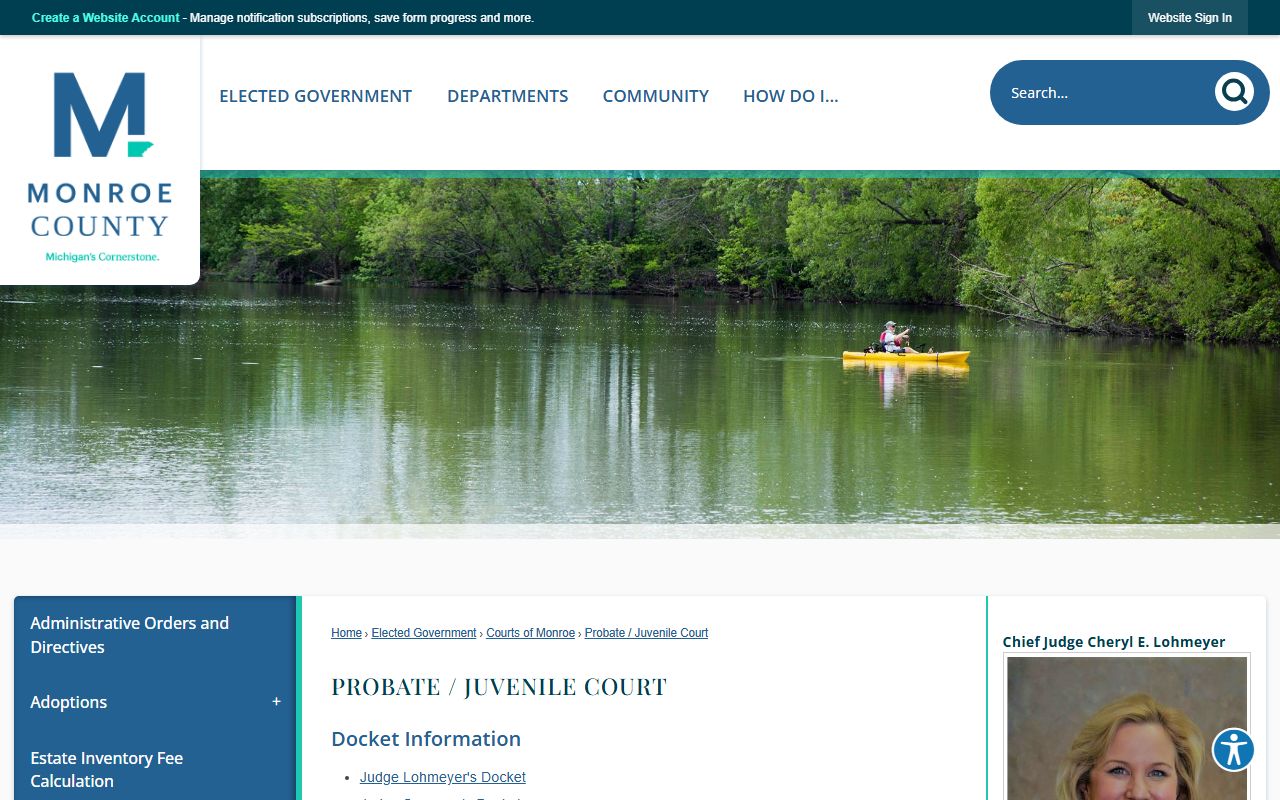
That single hub helps filers pick the right packet before they ever reach the counter. The main probate record categories include the following.
- Estates: decedent petitions, wills, inventories, letters of authority, creditor claims, accountings, and final distributions.
- Adult guardianships: petitions for incapacitated adults, clinical reports, hearing notices, and annual reports.
- Conservatorships: financial authority over adults or minors, with inventories, bonds, and restricted-account orders.
- Minor guardianships: care authority for children, often with limited public access when a child's details are involved.
- Mental health: treatment and hospitalization petitions that carry strong confidentiality protections.
- Name changes: petitions, notices, and orders, with some minor or protected cases restricted.
Adoption files are also processed on the probate and juvenile side, but they are sealed and are not treated as ordinary public probate records.
Monroe County Probate Filing Fees
Probate filings carry fees that vary by case type. Monroe County publishes them in one place rather than scattering amounts across separate forms. Estate inventory fees are different from filing fees because they are calculated from the value of the estate.
The official Probate Court Fee Table lists the charge tied to each filing type and points filers to the estate inventory fee calculator.
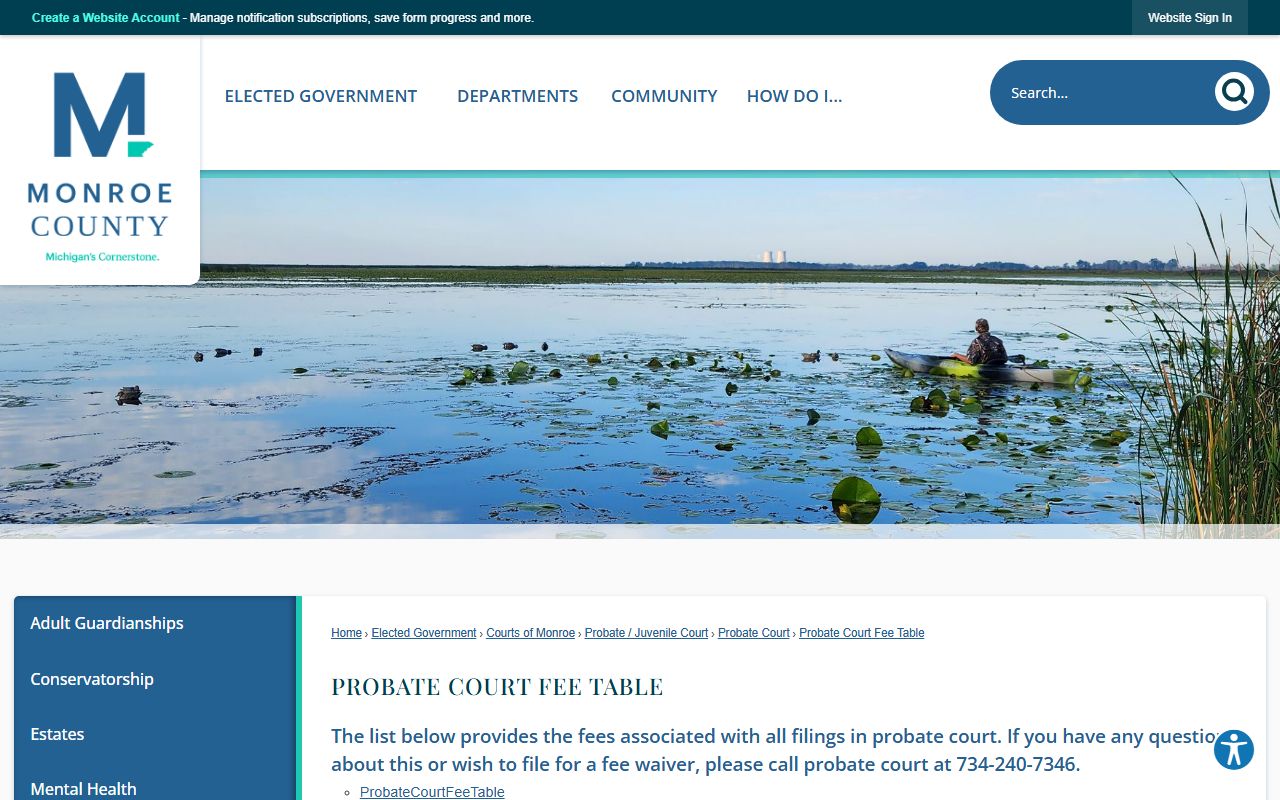
That page also tells filers to call the court about fee waivers. Because the county does not print the dollar amounts in its general text, the table below points to the official source rather than guessing at a number.
| Filing type | Fee |
|---|---|
| Decedent estate petition | See the Probate Court Fee Table / call 734-240-7346 |
| Guardianship petition | See the Probate Court Fee Table / call 734-240-7346 |
| Conservatorship petition | See the Probate Court Fee Table / call 734-240-7346 |
| Estate inventory fee | Calculated from estate value; use the county Estate Inventory Fee Calculation page |
| Name change petition | See the Probate Court Fee Table / call 734-240-7346 |
| Certified copies | See the Probate Court Fee Table / call 734-240-7346 |
| Fee waiver questions | Call the Probate Court at 734-240-7346 |
Note: Fee amounts are set by the court and can change, so confirm the current charge on the official fee table or by phone before you prepare a payment.
Filing a Monroe County Probate Case
A Monroe County probate case begins with the right petition and packet for the matter at hand. The county offers separate packets for estates, adult and minor guardianships, conservatorships, mental health, and name changes. Choosing the correct one saves a return trip and a rejected filing.
Service matters as much as the paperwork. Interested parties must be notified, and the court expects a completed proof of service that shows who was served and when. The Probate and Juvenile Court hub links proof-of-service instructions alongside the packets, so a filer can match the notice rules to the case type. Missing or defective service is a common reason a hearing gets adjourned.
Payment is handled through the court's published payment information, and staff answer fee-waiver questions by phone. Certified copies and full files that the portal does not post are requested directly from the Probate Court counter. Once a case is open, docket rows may show the case title, case number, hearing type, date, time, and courtroom when the matter is public.
Restricted Monroe County Probate Records
Not every Monroe County probate file is open to the public. The court protects sensitive medical, financial, and family details, and Michigan rules decide what a general searcher may see. When a case is restricted, the portal may show nothing or only a limited entry.
Mental health proceedings are among the most protected. They involve treatment and capacity information that is nonpublic or limited access. Adoption files are sealed by statute, and the confidentiality of those records is governed by MCL 710.67. Some guardianship and social-history materials also carry limited access, especially when a minor or a protected adult is involved.
Access, sealing, and clerk duties for Michigan court files follow MCR 8.119, the court rule that governs case records. Parties, attorneys, and people with statutory authority can often see more than the public portal reveals. When a record is nonpublic, the right move is to contact the Probate Court and ask how a qualified person may request it.
Note: A blank result in the portal does not always mean no case exists; a restricted mental health, adoption, or guardianship file may simply be shielded from open search.
Bankruptcy Is a Federal Matter
People sometimes look for bankruptcy filings on a county probate page. The two are not connected. The Monroe County Probate Court does not handle bankruptcy, and no county court in Michigan does. Bankruptcy is a federal case type, decided under federal law in a federal court.
Bankruptcy filings for this region run through the U.S. Bankruptcy Court for the Eastern District of Michigan.
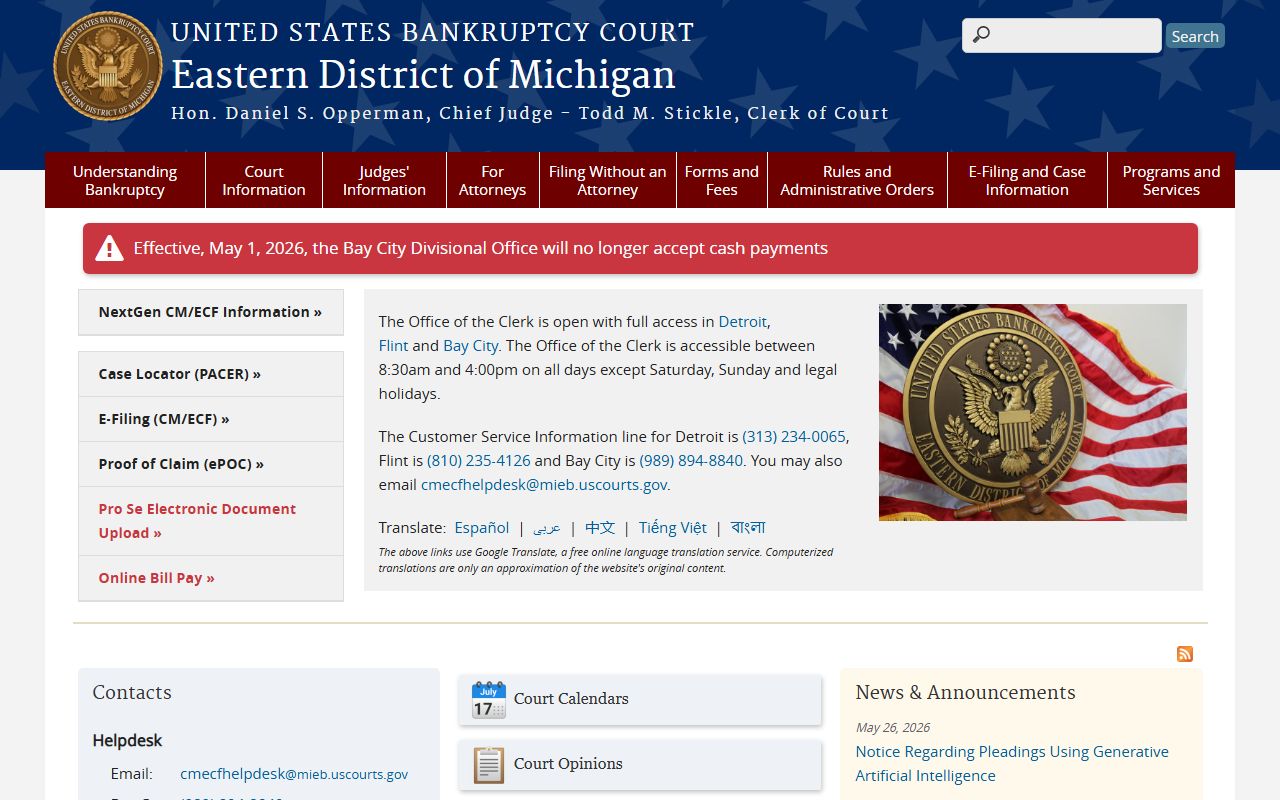
Its clerk's office serves Detroit, Flint, and Bay City, not the county courthouse in Monroe. To read a bankruptcy docket, researchers use the federal electronic access system rather than the county portal.
Case access for those matters runs through the PACER lookup for the Eastern District bankruptcy court.
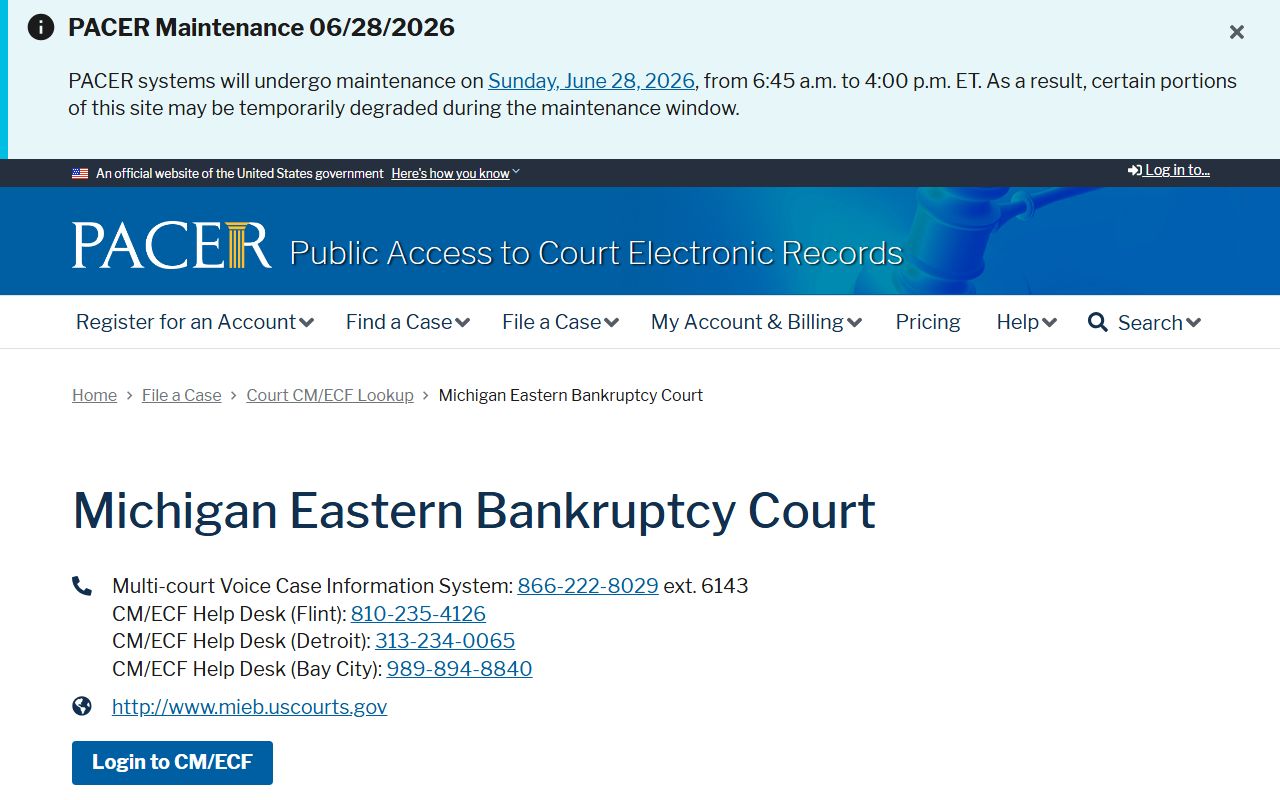
A PACER account, not the county probate system, is what opens those dockets. Registration and federal fees may apply unless a waiver or exemption is granted.
Do not search bankruptcy on the county portal. Estates, guardianships, and conservatorships are county probate matters; bankruptcy belongs to the federal Eastern District of Michigan.