
About the Monroe County Clerk's Office
Annamarie Osment holds the office of Monroe County County Clerk / Register of Deeds. The title carries two jobs in one seat. On the clerk side, the office keeps circuit court files and vital records. On the register side, it records the documents that prove who owns land. Both roles work out of the same downtown Monroe building.
The Clerk is the general recorder of births, deaths, marriages, and business or professional registrations. The office also serves as clerk to the 38th Circuit Court, secretary to nearly all county boards and commissions, and the administrative official for the County Election Commission. That mix makes the counter a first stop for many record needs. The office describes each duty on the county County Clerk page.
County Clerk / Register of Deeds
Clerk: Annamarie Osment
106 E First Street
Monroe, MI 48161
734-240-7020
Fax 734-240-7045
Jury info: 888-354-5500 ext. 7049
What the Monroe County Clerk Handles
The dual role is easy to picture once you split it. As Clerk, the office manages circuit court case files and issues certified vital records. As Register of Deeds, the same office records documents that affect property ownership, such as deeds, plats, mortgages, and land contracts. It also makes digital images of those recorded documents, keeps journal records, and chairs the Monroe County Plat Board.
Beyond records, the Clerk supports the machinery of county government. The office acts as secretary to the Board of Commissioners and most other official boards. It runs the administrative side of the County Election Commission. Because the same office wears so many hats, a short list helps sort what belongs at this counter.
- Clerk to the 38th Circuit Court for felony, civil, domestic, and divorce case records
- Recorder of births, deaths, marriages, and business or professional registrations
- Register of Deeds for deeds, plats, mortgages, and land contracts
- Secretary to nearly all county boards, including the Board of Commissioners
- Administrative official for the County Election Commission
- Chair of the Monroe County Plat Board
The county page that lists these roles doubles as a launch point for filing channels and online applications. A quick look at the office landing page shows how the duties connect.
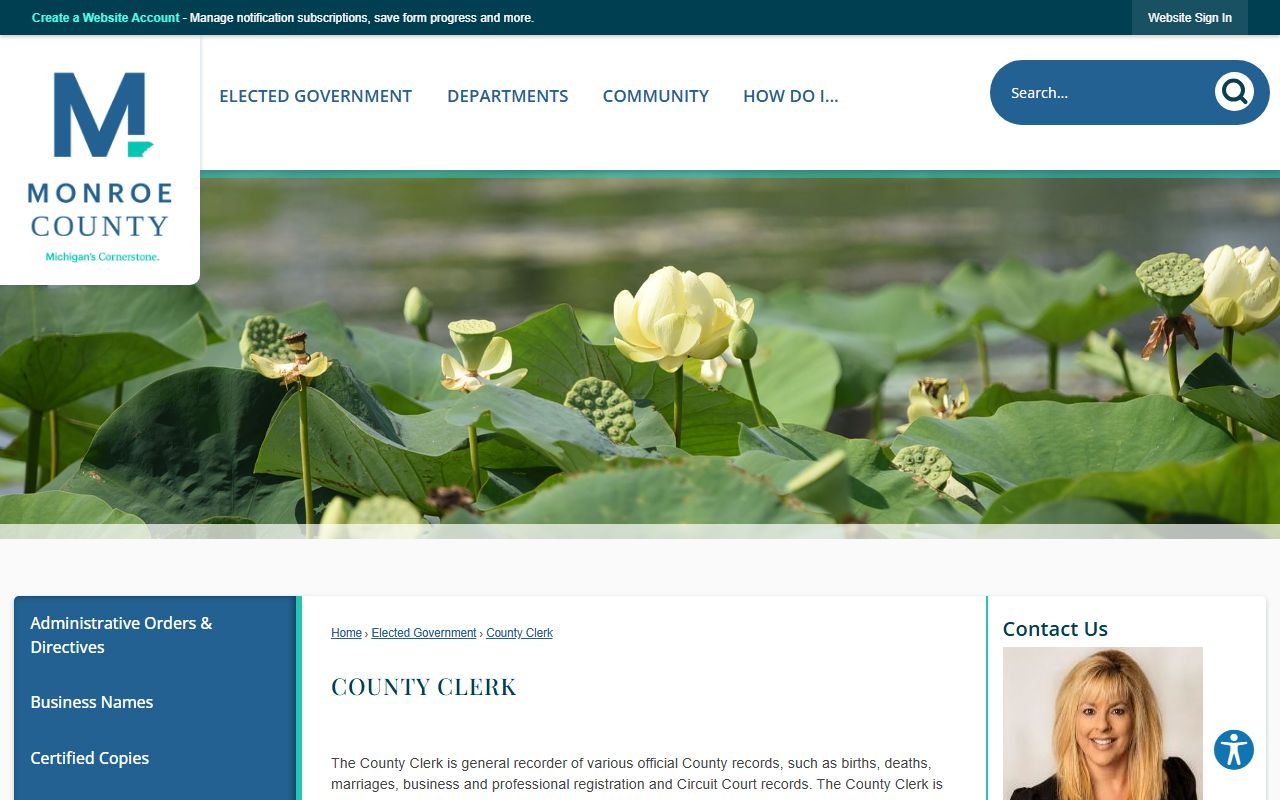
The County Clerk page pulls the filing rules, drop-box locations, and pre-application links into one place, which is why it is worth a read before a first visit.
Note: The Clerk holds circuit court and vital records, while the 1st District Court and Probate Court keep their own case files, so match the record to the right office first.
Monroe County Circuit Court Records
Circuit court records start with the Clerk. The 38th Circuit Court is the general-jurisdiction trial court, and the County Clerk is its clerk. That covers felony criminal files, civil cases over 25,000 dollars, and family-division matters such as divorce and personal protection orders. When someone needs the official court file, the request routes through this office rather than a private database.
Divorce shows how the two sides of the office connect. A certified divorce record comes from the Clerk and vital records counter with a raised seal. The underlying case file, with the complaint, orders, and judgment, lives with the Monroe County Circuit Court and can also surface through the state case search. Marriage certificates follow a similar split, which is why many people compare notes on the county marriage and divorce records channels before they request one.
Online case tools are a starting index, not the full file. Sealed, nonpublic, juvenile, and older records may not appear on a screen at all. For those, a direct request to the Clerk or the court that owns the case is the reliable path.
How to Request a Certified Copy
A certified copy is the version courts, agencies, and title companies accept. The Monroe County Clerk's Office issues certified copies of birth, death, marriage, and divorce records, and every copy it issues carries a raised seal. State statutes govern how the office issues these documents, and those laws are kept in the Vital Records office for inspection. The steps below keep a request moving.
Important. A screen printout is not a certified copy. Legal proceedings, passports, and title work require the certified version with the Clerk's raised seal.
- Decide which record you need, then confirm the birth, death, marriage, or divorce was recorded in Monroe County.
- Gather the details the Clerk needs, such as full names, the event date, and your relationship or legal interest.
- Reach the Vital Records counter in person, by phone, by mail, or through a drop box to get the current form and fee.
- Submit the request with a valid photo ID and an accepted payment; the office does not take personal checks.
- Pick up the certified copy or wait for it by mail; each one leaves the office with a raised seal.
The office keeps request channels and record types on its Certified Copies page. Calling ahead confirms the current fee and what proof of identity the counter expects that day.
Monroe County Records Request Fields
Many clerk transactions begin with an online pre-application through the Apex and Fidlar system. The static county pages show the categories and the process rules, while the detailed identity fields live inside the transaction workflow. The table sums up what an applicant supplies and where it matters.
| Field | Required | Notes |
|---|---|---|
| Application category | Yes | New CPL, CPL renewal, marriage, business name, or notary |
| Applicant identity fields | Transaction-specific | Detailed labels appear inside the Apex and Fidlar workflow |
| In-person completion | Yes for marriage | Wait at least three days after the online application, then appear |
| Payment method | Yes | No personal checks; a CPL accepts cash or card |
Because the live form can add its own screens and prompts, the labels a user sees may differ from the short summaries the county publishes. Treat the table as a checklist of what to bring, not the exact field order.
Monroe County Clerk Fees
Clerk fees depend on the service, and a few carry small card-processing charges. The concealed pistol license amounts are published by the office, while the exact certified-copy fee is set at the counter and is best confirmed before payment. A local record check is a Sheriff's Records Division service, not a court-certified history, but people often ask about it in the same visit.
| Item | Amount |
|---|---|
| New concealed pistol license (CPL) | $115 (includes $15 fingerprinting; $5.75 card processing) |
| CPL renewal | $115 ($5.75 card processing) |
| Certified copy (birth, death, marriage, divorce) | Confirm with the Clerk |
| Local record check (Sheriff's Records Division) | $15 |
| Personal checks | Not accepted |
Note: The Clerk does not publish a certified-copy dollar amount in its online materials, so call ahead for the current price rather than relying on a figure from another county.
Apex and Fidlar Online Applications
The Monroe County Clerk offers an online pre-application portal that trims counter time. Through the Apex and Fidlar system, users can fill out applications for a new CPL, a CPL renewal, a marriage license, a business name, or a notary commission before they ever walk in. The portal starts the paperwork, but it does not finish it.
Marriage carries a built-in pause. An applicant completes the online application, waits at least three days, then appears in person to finish the license. An in-person visit is still required to complete these transactions, so the portal is a head start rather than a full replacement. The office links the tool from its online applications portal.
Filing With the Monroe County Clerk
The courthouse is open to the public, and court documents may also be filed by mail or drop box. Drop boxes sit at the courthouse entrance, the Bedford Sheriff's Substation, and the Maybee Sheriff's Substation, which spreads out access for residents across Monroe County. Payments for many services can move the same way.
Filing limits. The Clerk does not accept court filings by email or fax, and the office does not take personal checks. Plan for an accepted payment method before you file.
Choosing the right channel avoids a wasted trip. Simple pre-applications belong online. Time-sensitive filings and payments belong in the drop box or at the counter. Certified copies and questions about older records are best handled by phone or in person, where staff can confirm what the file holds.
Note: Filings sent by email or fax are not accepted, so a mail delivery, a monitored drop box, or an in-person visit is the only way to place a document on file.
Public Records and Michigan FOIA
Two bodies of law shape access. Court case files follow the Michigan Court Rules and clerk procedures, while many Monroe County administrative records follow the state Freedom of Information Act. Knowing which set applies tells a requester where to knock and what to expect.
The Michigan FOIA sets a public policy of access to public-body records. Its public-policy section, MCL 15.231, opens the act, and related sections require public bodies to allow inspection and copying after a written request unless an exemption applies. Court records, though, run mainly through court rules rather than FOIA, so a case-file question and an administrative-records question can take different paths.
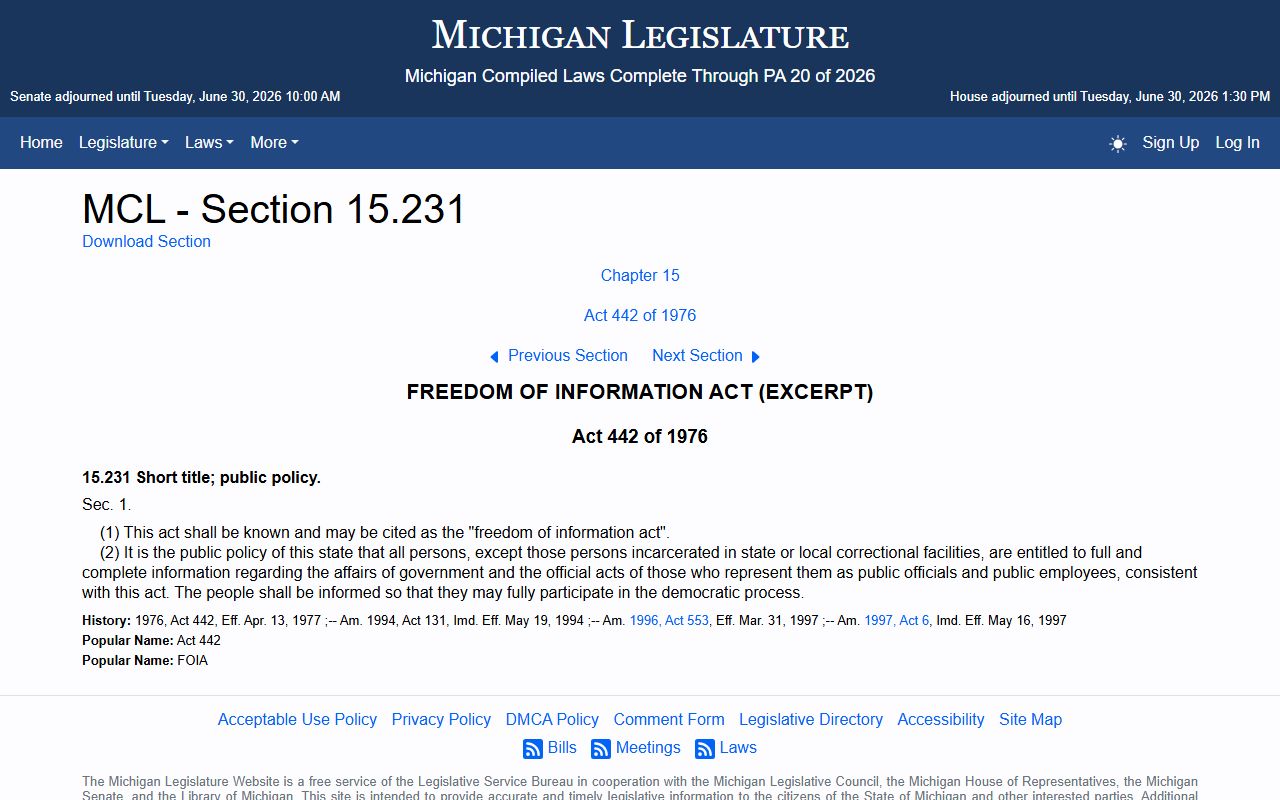
That statute is the backbone of most public-record requests to a county office, which is why it is worth reading before sending a written request. The state also publishes a plain-language guide for people who file one.
The Michigan Attorney General maintains a FOIA resource that walks through how to write a request, what a public body may charge, and how the response process works. It is a useful companion to the statute, especially for a first-time requester who wants a template to follow.
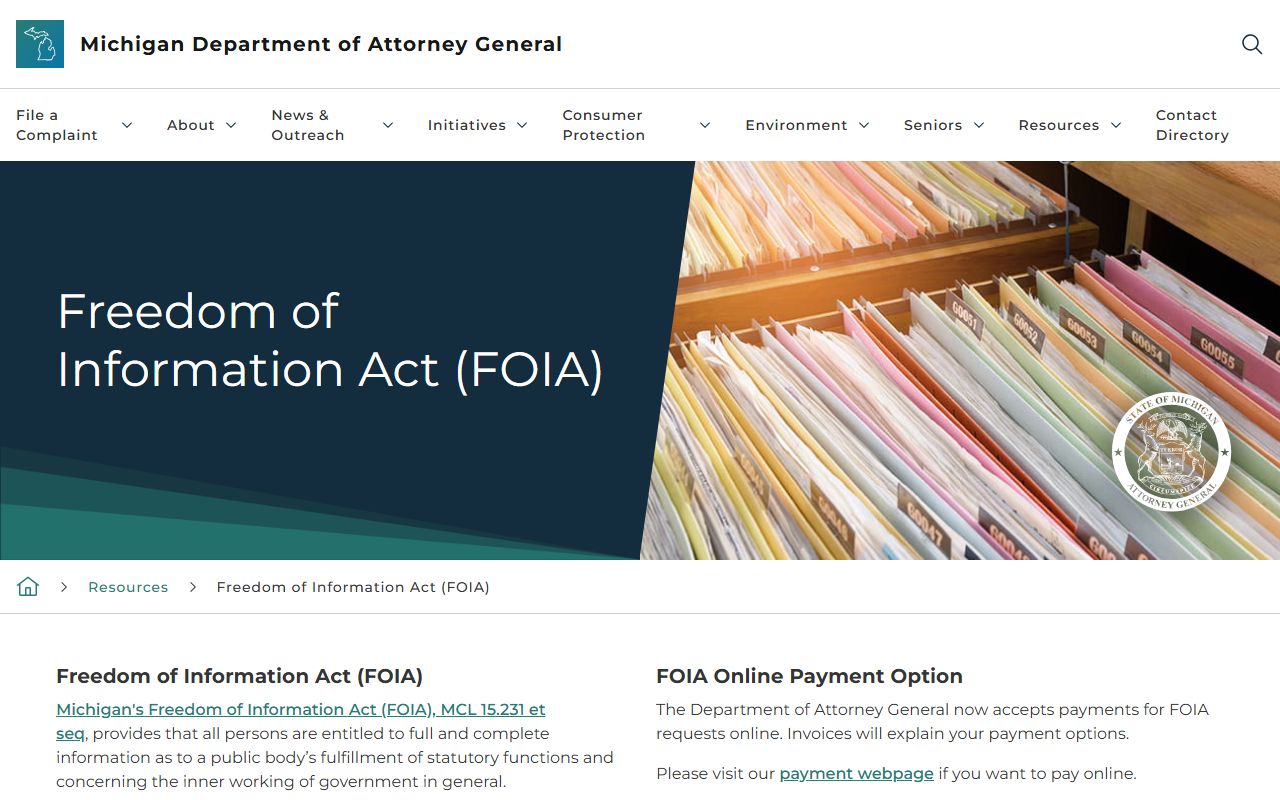
Reading the Attorney General FOIA resource alongside the statute makes a request cleaner and cuts the odds of a back-and-forth over missing details or the wrong office.
Older Monroe County Records
Some record searches reach back far past any database. The present Monroe County Courthouse was built in 1880, after an earlier fire, and the Clerk's Office still holds partially burned records from before that time. Some documents dating to 1856 remain legible and are still used to settle historical facts.
That history matters for anyone chasing 19th-century land, marriage, probate, or court material. Older paper may survive as a fragment, a clerk archive, or a special historical form rather than as a clean online entry. The county history page gives helpful background before a deep search.
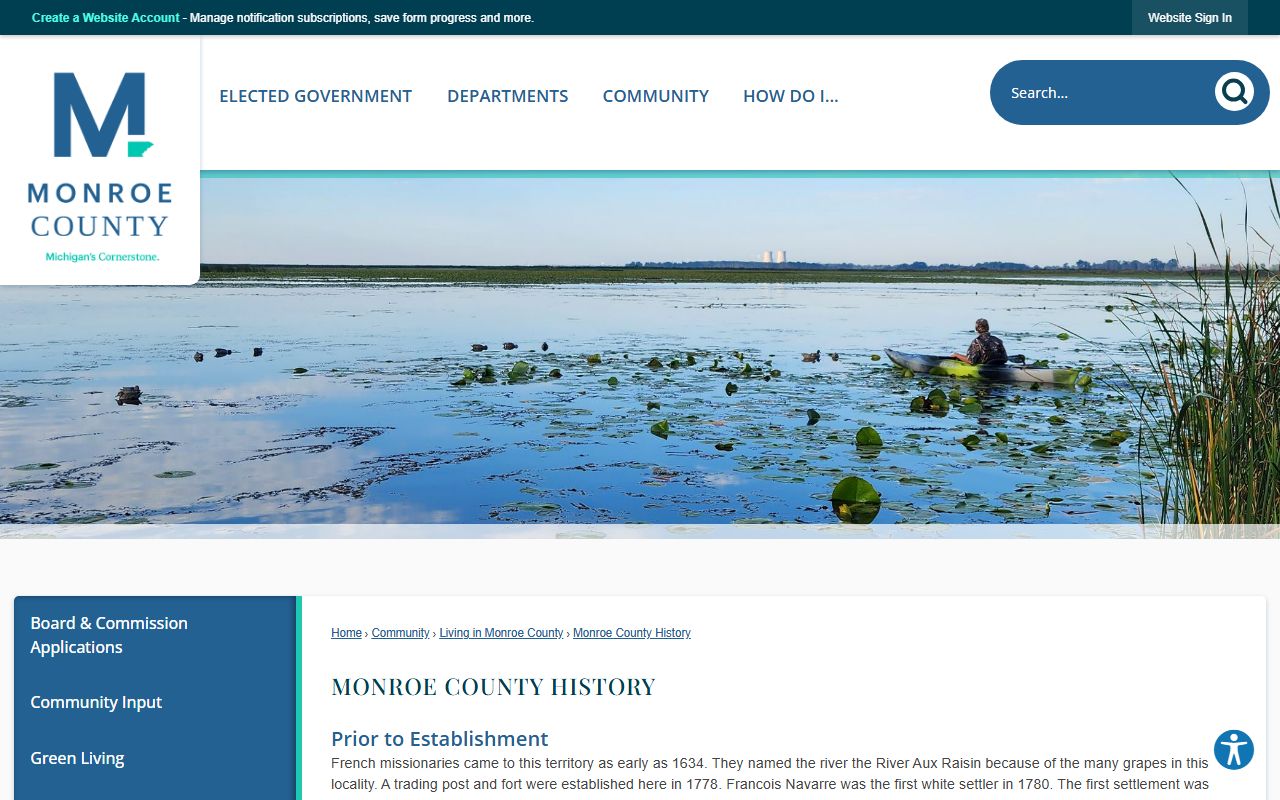
The Monroe County history page explains the courthouse timeline and the surviving fragments, which sets expectations for what the Clerk can and cannot pull for very old requests.
Note: For records older than the modern portals, the Clerk and Register of Deeds archives can matter more than any online search, so a phone call often beats a keyword.